Tuesday, 10 March 2020

Leighton Linslade

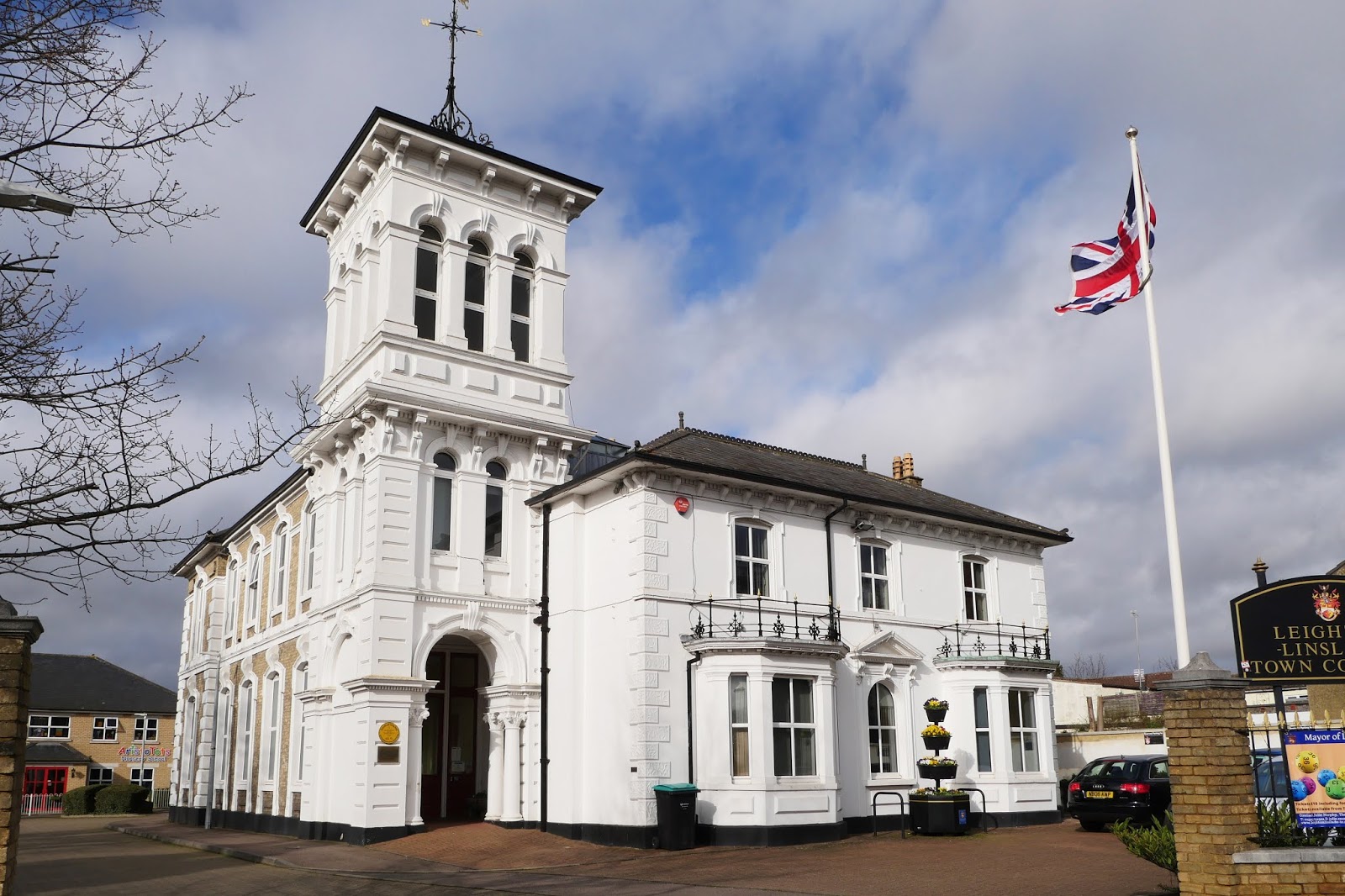
The Town Council Offices

Fresh from an enjoyable exploration of Aylesbury, Merv and I decided to have a look at Leighton Linslade 15 minutes or so to the north.

Leighton Linslade used to be known as Leighton Buzzard, but the adjoining settlement of Linslade, separated only by the small river Ouzel, gradually coalesced with it and in 1965 the two settlements became a combined Urban District. Leighton Buzzard has always been an intriguing name and there are various theories about how it came about.

We started our walk at the Town Council offices which are in a large house of about 1850. We collected a copy of the Living History Trail, which we thought would offer a town walk. Sadly, it didn't do that (although the map of the main streets was handy) but the accounts of the doings of ordinary people were interesting.

From the Council Offices we headed down Leston Road to reach Lake street and the former Temperance Hall, now Lecton House.


From here we walked up Lake St to reach the Market Square with its 15th century Market Cross: "an uncommonly fine piece" according to Pevsner.


Nearby is the former Market Hall, which later became the Town Hall and in 1919 it was turned into the Fire Station. "Wholly undistinguished, wholly delightful" was Pevsner's assessment, with which I agree.


Opposite the Market Cross was the Swan Hotel with a delightful swan in the ballustrade.


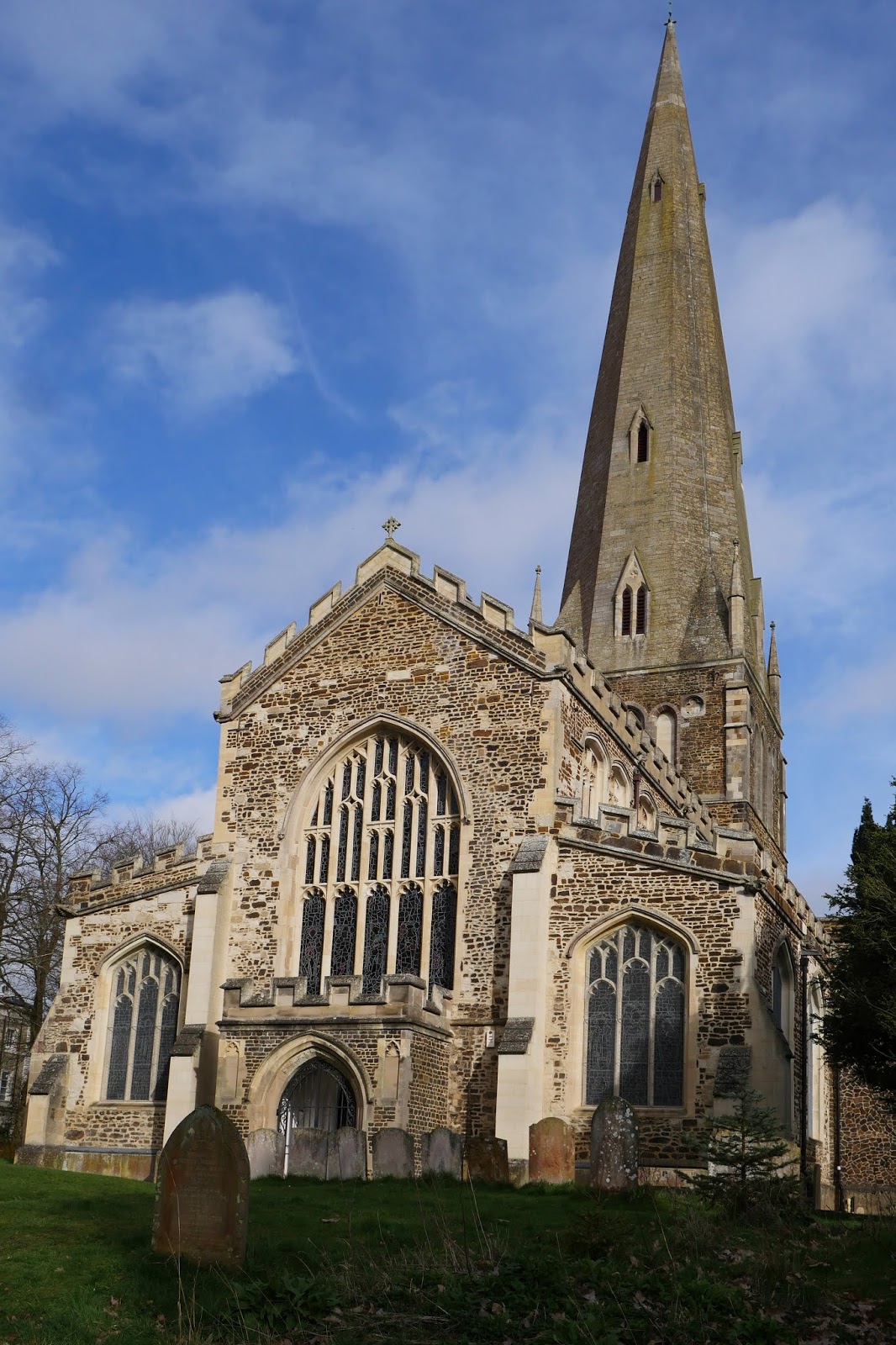
Market Street gives way to the not-very-interesting High Street, but at the bottom the wide Church Square leads to the church of All Saints in the Perpendicular style of the 15th century.

Outside, I found this broken column to be an unusual and moving gravestone.


The church was severely damaged by fire in 1985, but has been restored exceptionally well. The nave and aisle roofs are in the East Anglian style with absolutely fabulous angels.


We have seen similar examples in Stamford and Norwich in recent years.

By chance we stumbled on the so-called Simon and Nellie story carved into a wall by the south west pier. They are the traditional inventors of the Simnel cake. Nellie is threatening Simon with a spoon.


As we headed back up the High Street we were struck by just how awful was this building on the corner of Church Square.


Returning to the Market Square we headed up North Street to see first the Wilkes Almshouses (established 1650, rebuilt 1857 and extended 1873.


And a little further on, in Church St, the Page Almshouses of 1903. "A sweet design" according to Pevsner. Certainly they are very picturesque.


We didn't get to see Linslade, thus missing a sight of the Grand Union Canal.

Conditions: grey, cool.

Distance: a couple of miles.

Rating: four stars. There was much more to it than I had expected.

Aylesbury

Market Square

Another of our town walks with my friend Merv. This one was guided by an excellent booklet produced by the Town Council and available for £1from the Town Council Office or the Museum. We started the walk in the irregularly shaped Market Square. At the far end is the County Hall of 1740, which included the County Court, and the Corn Exchange to its left. The Heritage Walk booklet offers the macabre information that public hangings took place outside until 1840.

The main entrance to the County Hall, appropriately enough, has an Aylesbury duck over the doorway.


In front of the Court House are a fine pair of lions. They once stood on the lawn of Waddesdon Manor and were given to the town by Baron Ferdinand de Rotthschild, the local MP from 1874 to 1898.


The other main feature of the Market Square is the Clock Tower, which was unveiled in 1865.


We walked through the passageway under the Corn Exchange and were struck by this monument to David Bowie.


At the back of the County Hall are the former Gaol and Judge's lodgings.


Continuing in this direction I spotted to my joy a branch of Gourmet Burger Kitchen (so lunch was sorted) and the impressive Aylesbury Waterside Theatre which was opened in 2010.


We doubled back and walked through the Market Place to the opposite corner where there was a fine statue of Disraeli.


Diagonally opposite from it was this imposing bank building.


Our route now led into a square called Kinsbury, from which a narrow street, Pebble Lane, led towards St Mary's Square. St Mary's church dates from the 13th and 14th centuries, but like so many churches it was restored in 1850 by Sir George Gilbert Scott. At some point the church housed the town's fire engine.


On the diagonally opposite side of the square is this rather nice row of houses, which seem to have once been the workhouse.


Left of the church, at the entrance to Church St, are Hickman's Almshouses (surprisingly not mentioned in the Heritage Walk). They established in old cottages in 1695 and rebuilt 1871


Further along the picturesque street is the Chantry with a Gothic facade added in 1840 over a 15th century facade. It was the home of Thomas Hickman who founded the eponymous almshouses and whose charity has provided a good number of properties for the less well-to-do.


At the bottom of the street is another fine mansion.


Our final sight was the handsome 17th century Green End House in Rickfords Hill.


Conditions: cool and grey.

Distance: a couple of miles.

Rating: four stars. As Pevsner says "there are plenty of enjoyable buildings, but almost nothing of the first order".

Thursday, 27 February 2020

Welford Park

Welford Park

We visited Welford Park with friends ostensibly to see the celebrated display of Snowdrops. It was the first decent day of weather for a while and so we were all looking forward to it very much. Sadly however the Snowdrops had largely passed their peak. We still had a nice outing though.

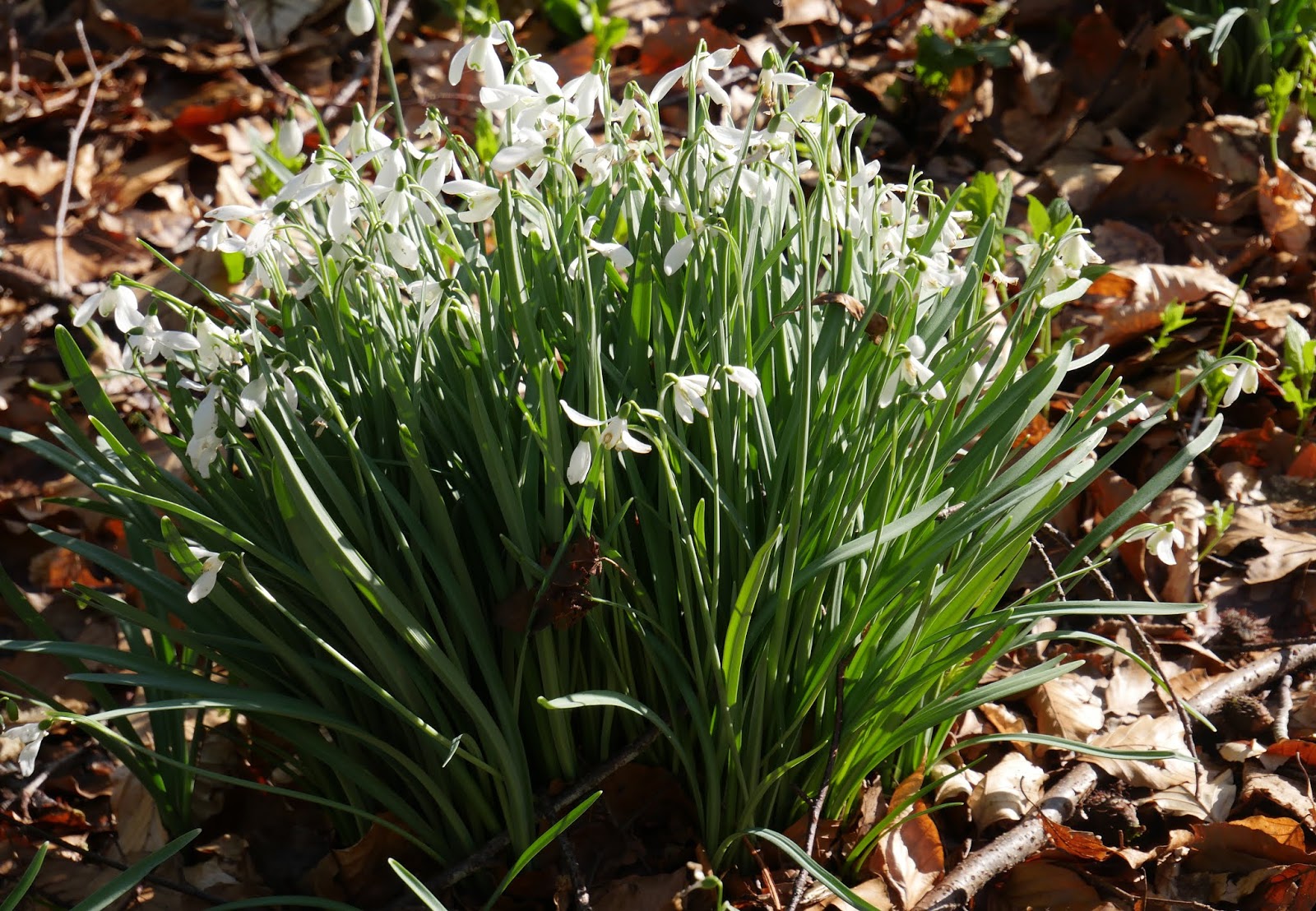
From the car park a path leads into the grounds of Welford Park and along the bank of the rather lovely river to the wooded area where the Snowdrops are normally found. As the picture shows, none were in view, but the view itself was very nice.


Happily, we did find a small clump in the corner of the wood, so our mission wasn't in vain.


We crossed the river bridge (see the photo at the head of this post) and walked towards the House, passing this lovely row of trees.


Further on, on the left by the water was this lovely withy clump.


I must admit that for me seeing the house and church were probably more important than the Snowdrops. We had some glimopses of it when were walking from Lambourn to Welford on the Lambourn Valley Way . The house dates from the late 17th century and, unusually, has been in the same family for all that time.


The church, which is just behind the house, has an interesting history. It was built in 1852-55 to replace a Norman church which had a 13th century stone spire with eight dormers. The new church's tower and spire are an exact replica of the previous one, although everything beneath them is new. One can't help but wonder why they did it.


Conditions: a beautiful sunny day, if cold.

Map: Explorer 158 (Newbury & Hungerford).

Rating: four stars. 

Saturday, 15 February 2020

Portugal: Lisbon - Belem


 The Belem Tower

We are trying something different again today – a mixed bus and walking tour focusing on the Belem district, down by the River Tagus. We pick up the Yellow Bus at the Liberadores stop in Praca Dom Pedro IV and make one intermediate stop at the Calouste Gulbenkian Foundation. The Foundation was built to house Gulbenkian's collection after his death in 1955 and opened in 1969. It offers a wonderful journey through art history from Egyptian and Roman artifacts, through medieval and Renaissance painting up to the Impressionists, with tiles, furniture and items by Lalique as well. 

Unfortunately, photos were not allowed inside the gallery, but this fantastic piece in the foyer could be. It is a called La Primavera: A homage to Jean Goujon and was sculpted by Alfred-Auguste Janniot between 1920 and 1924. Janniot does not seem to be well known, but we thought it was a wonderful price of work.


We got back on the bus and followed quite an interesting route down to Belem, which included an aqueduct and the gaol. We learned that Portugal was the first country to end capital punishment.We enjoyed this view over the Tagus.


 The first main sight of course is the Belem Tower. Here is a detailed view.


It was built in 1519 as a defence for Lisbon. A matching fort was built on the other side of the Tagus, but there is no trace of it now. The Tower is a UNESCO World Heritage Site.

We took advantage of a wonderfully entrepreneurial venture: Wine a view. It was a sort of mobile wine bar with a wide selection of wines served in plastic glasses which you keep. A small number of chairs were placed by the retaining wall of the river, or you could sit on the wall if they were full. We enjoyed a delightful interlude sipping wine and enjoying the warm sunshine (!). This is one aspect of the view.


After a while we strolled along the riverside promenade towards the magnificent Monument to the Discoverers. On the way we passed this curious brick lighthouse, seemingly derelict.


Soon after we reached the magnificent Monument to the Discoveries …


The monument was conceived in 1939 by  architect José Ângelo Cottinelli Telmo, and sculptor Leopoldo de Almeida, as a temporary feature of the Portugese World Exhibition opening in June 1940. The building you see today was completed in 1960 and formed part of the of the 500th anniversary of the death of Henry the Navigator. He is the leading figure, more easily seen in the close up below. Vasco de Gama, the only other Portugese discoverer I can think of, is behind Henry on the other side of the monument.


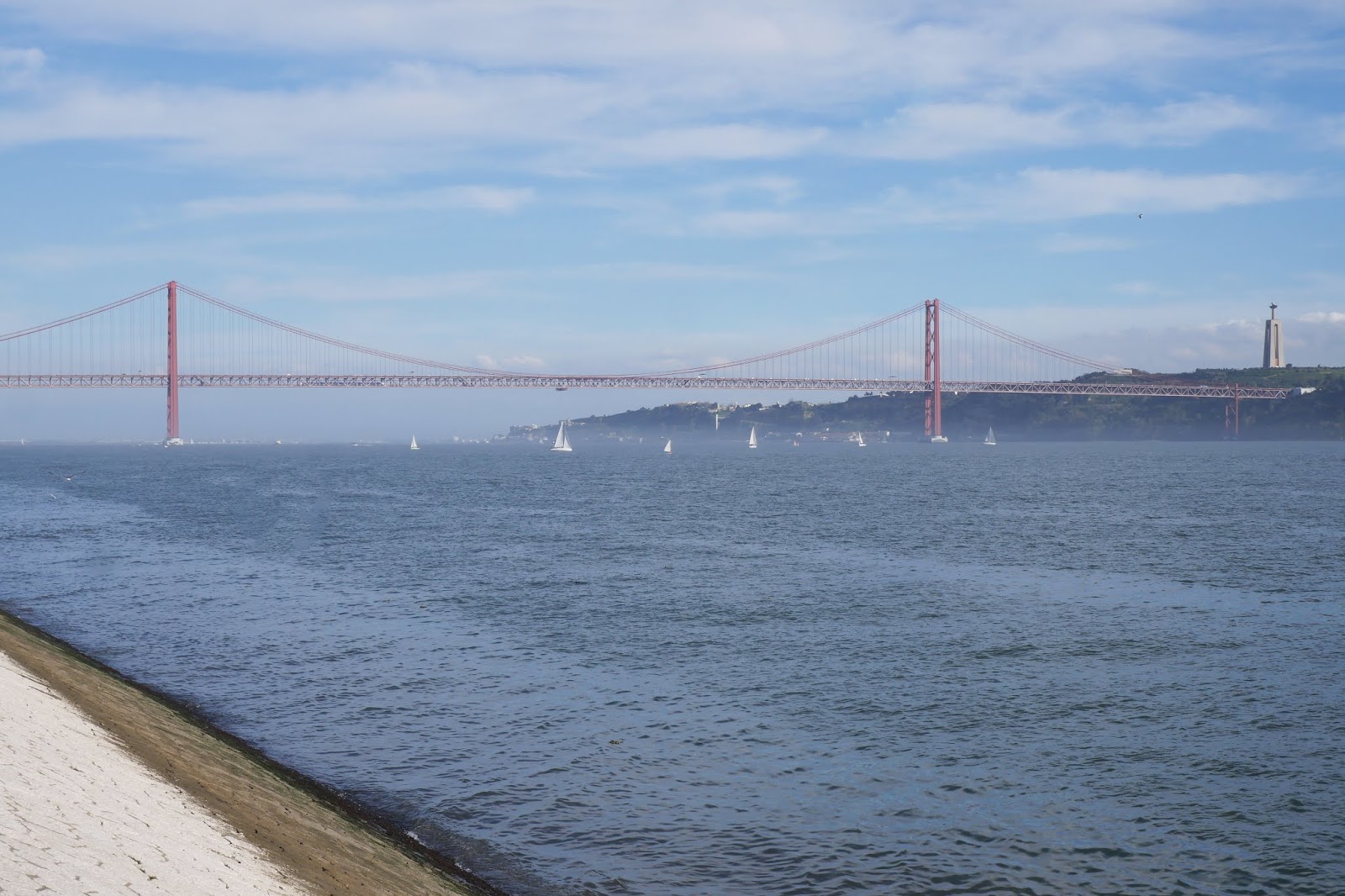
Beyond it was the splendid 25th of April Bridge which we had driven across on our way into Lisbon the previous day. We discovered later that a railway line runs underneath the roadway.


On the far bank was the statue of Christ the King – in the style of the more famous Christ the Redeemer in Rio di Janeiro – towered impressively. It was consecrated in 1958 and was built in thanks for Portugal avoiding the horrors of World War 2, although this possibly owed more to the policies of the Portugese dictator, Salazar.

Now we headed away from the river to take the underpass beneath the road and railway which leads to St Jeronimo's Monastery, which is also an UNESCO World Heritage site. This enormous structure consists of two parts, the Monastery on the left hand side which now seems only to host exhibitions (and the ticket machines for the cloister) …


… and the church and cloister on the right (the cloister is behind the church).


The complex was built to fulfill a promise made by the King of Portugal to do so if Vasco de Gama returned from his inaugural voyage of 1498 to India. Happily he did. Construction began in 1502 in the Manueline style. Vasco's tomb lies inside the church.

The ceiling of the church has beautiful vaulting.


You leave the church and enter the Cloister by its separate entrance (where your machine-produced ticket is validated by a man with a pen). The first sight of the two storey cloister was extremely impressive, especially with the late afternoon sun illuminating the far side. (We had been here before, 26 years ago, but it is still capable of making a tremendous impression.)


The whole thing is on a grand scale: this is one side of the downstairs section.


A staircase leads to the upper section which also offers a view towards the church highlighting its dome.  


Finally, we enjoyed the former refectory with its tiled walls and vaulted ceiling.


It remained only to catch the Yellow Bus back to Rossio square. 

Conditions: mainly warm and sunny.

Rating: five stars.