Thursday, 15 September 2022

Sissinghurst

We are fulfilling a long-held wish to visit Sissinghurst. There was a house here in Saxon times, but what you see today (notably the Tower) dates from the 16th century and later. During the Seven Years War (1756-63) it was used as prison camp for captured French sailors and thirty years later as a work house for the poor.  New owners made improvements in 1839, but much of what you see today was the work of Vita Sackville-West and Harold Nicholson who bought the castle in 1930. They laid out the gardens and and transformed the stables into the Long Library.

You go through the archway ...


.... and are immediately confronted by the Tower. We climbed up the steep spiral staircase, passing Vita's writing room, and emerged onto the top of the tower.


 There is a great view looking back towards the Long Library, with the Oast Houses in the background.


There is also a nice view of a section of the gardens.


Returning to ground level, we explored the grounds ...

... and some of the lovely Gaura flowers, a new one for me.

Then we headed off for refreshments, passing the Elizabethan Barn on our way.


And finally, as we departed, we had a good close up of the handsome Oast Houses.


Leeds Castle

We were looking forward to seeing Leeds Castle, despite the gray skies, but when we arrived we were confronted by the news that the Castle interiors could not be visited because of a fault of some kind. We were offered the opportunity to come back another time, but we live far enough away to make it impractical. However, we pressed on making an almost complete circuit of the buildings.

A castle has existed on the site since 857. In the 13th century, it came into the hands of King Edward I, for whom it became a favourite residence. In the 16th century, Henry VIII used it as a dwelling for his first wife, Catherine of Aragon. 

There were various owners until Robert Fairfax owned the castle for 46 years until 1793 when it passed to the Wykeham Martins. Sale of the family estates in Virginia released a large sum of money that allowed extensive repair and the remodelling of the castle in a Tudor style, completed in 1823, that resulted in the appearance today.

The Wykeham Martins were forced to sell the castle and estate in 1924, in order to meet death duties. The last private owner was Lady Baillie, who made improvements to the interior. Upon her death in 1974, Lady Baillie left the castle to the Leeds Castle Foundation, a private charitable trust whose aim is to preserve the castle and grounds for the benefit of the public.

We started our walk on the west side of the castle and our first discovery was that it was built on islands in a lake formed by the River Len to the east of the village of Leeds.

We headed anti-clockwise passing the ruins of some much earlier stage of the castle's history.

Continuing in the same direction we reached the imposing Barbican.

As we continued in this direction we had a different view point on the entrance. If you look closely you can see various people and machines deployed in repair work.


Here is a further, more detailed view of the east side of the Castle.

And here is a close up of the large buildings.


Wednesday, 14 September 2022

Hever Castle


Hever Castle began as a country house in the 13th century. From 1462 to 1539, it was the seat of the Boleyn (originally 'Bullen') family. The oldest part of the castle dates to 1270 and consisted of the gatehouse and a walled bailey. The property subsequently passed through various owners, including the Waldegrave family from 1557 to 1715, the Humfreys family to 1749 and the Meade-Waldo family from 1749 to 1903. During this latter period of ownership, the castle fell into a poor state of repair.

Luckily, in 1903, it was acquired and restored by the American millionaire William Waldorf Astor who used it as a family residence. He completed a restoration, added the Tudor village and also added the Italian Garden to display his collection of statuary and ornaments


The Tudor village is a large and quite picturesque collection of buildings. Nowadays you can stay in one of these for Bed & Breakfast.

The Castle is to the right of the Tudor village. Here is the square-on view. It features the oldest working original portcullis in England.

And this is the sideways-on view.

You enter across the bridge and through the massive gatehouse to emerge into a small courtyard which leads to the interior of the castle. The interior is quite opulent with beautiful wood carving everywhere. This dates only from 1903-7. Pevsner describes it as a virtuoso display. The architect was J L Pearson and the carver was W S Frith.

The Inner Hall

The Drawing Room.

The Staircase Gallery was built over the Entrance Hall in c.1506 by Thomas Boleyn to give access between the two wings of the house and his newly built Long Gallery upstairs.


The Long Gallery was constructed in the sixteenth century and extends across the entire width of the Castle. It was used for entertaining guests, taking exercise, and displaying art collections. The panelling dates from the sixteenth century, but the ceiling is an early twentieth-century reconstruction in the Tudor style created by Nathaniel Hitch.

I have focused mainly on the Castle, but there are also extensive grounds, ornamental gardens and a large lake. 

And finally, as you enter or leave the Castle you will pass the church of St Peter. It dates from the 12th Century, but was restored in 1894. It contains the tomb of Sir Thomas Bullen, father of Anne Boleyn and grandfather of Queen Elizabeth the First.


Wednesday, 31 August 2022

Ostuni


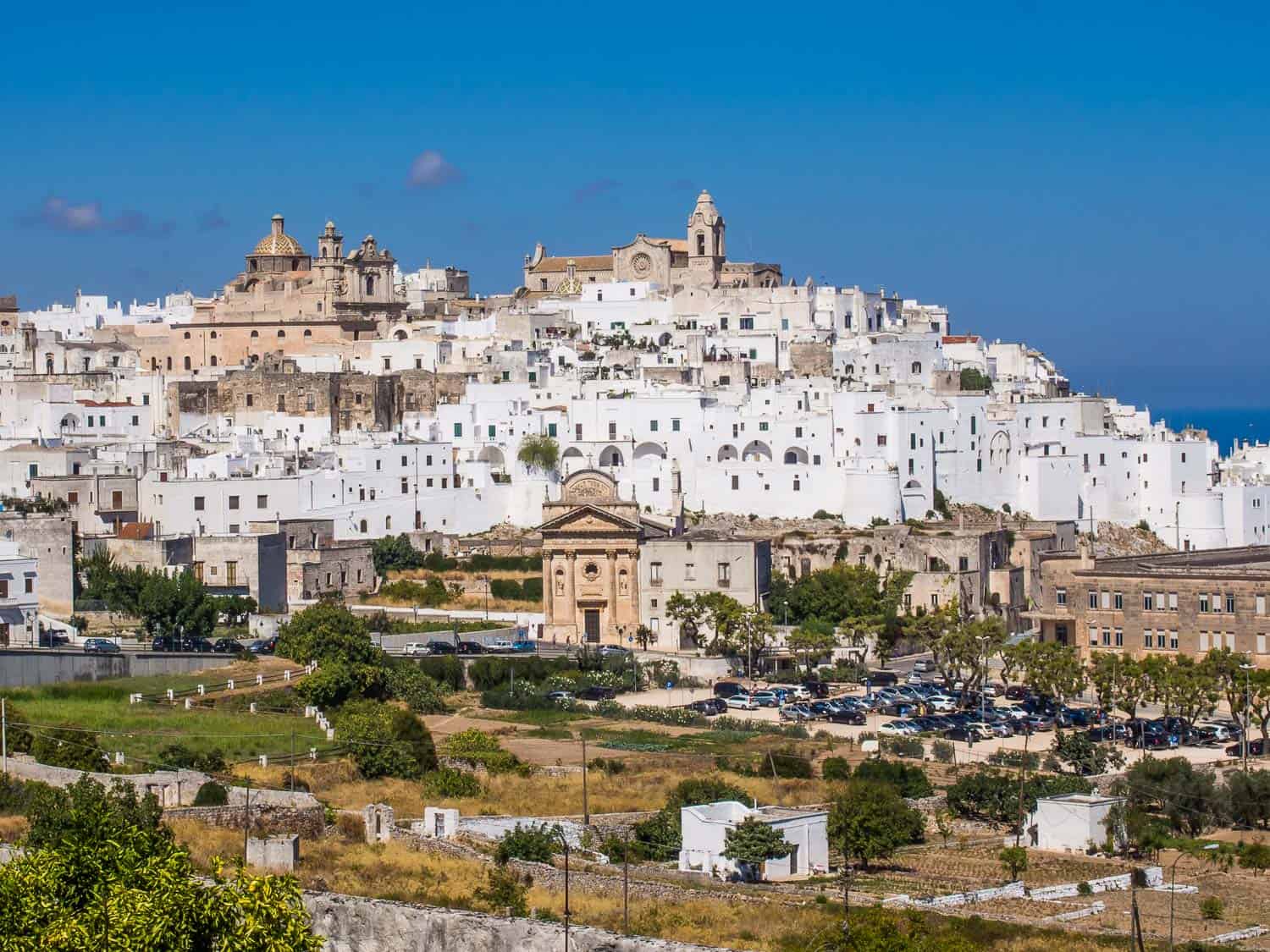
Today we are on an outing from Conversano to Ostuni, the White City of Puglia. We approached from the landward side. Had we gone  round to the seaward side (the sea is only 3 kilometers away) we would have had this more spectacular view.

Exploring Ostuni, Puglia's White City


We parked the car in a very quiet car park and found our way into the the not very imposing Porta Nova, which dates from the 15th century.


We began a leisurely upward climb along paths between whitewashed houses. Many had very elaborate stone door frames.

We emerged from a series of narrow paths into a square with the Cathedral of Santa Maria Assunta at its end. The Cathedral was built between 1435 and 1495 in the late Gothic style. The magnificent rose window has 24 finely carved ribs.


Looking back, we realised we had walked under the beautiful loggia of 1750 which links the Palazzo Vescovile and the Palazzo del Seminario.


We headed next to the interior of the church is XVIII century and has a level ceiling and Baroque side chapels.

We continued our wandering along more winding streets ...


... and then came on the Baroque church of Santa Maria Maddelena. It is now the Archaeological museum.

We headed down towards the main square ...

... but overall we felt it was too crowded by comparison with the quiet paths we had followed so far. I did rather like these arches however.


Tuesday, 30 August 2022

Polignano a Mare

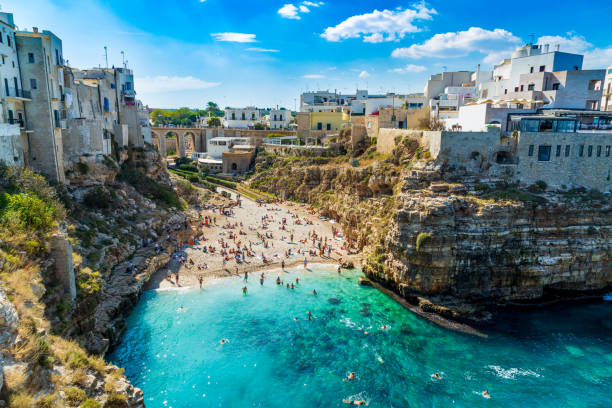
We decided to have an excursion from Conversano to the seaside. The first places we tried were not very inspiring, but eventually we happened upon Polignano a Mare. We parked near the centre of the town and headed towards the pretty, small bay. The picture below gives a view looking towards the beach, while the one above, taken from the road bridge gives a more realistic sense of how popular - and crowded - it was.

2,042 Polignano A Mare Stock Photos, Pictures & Royalty-Free ...


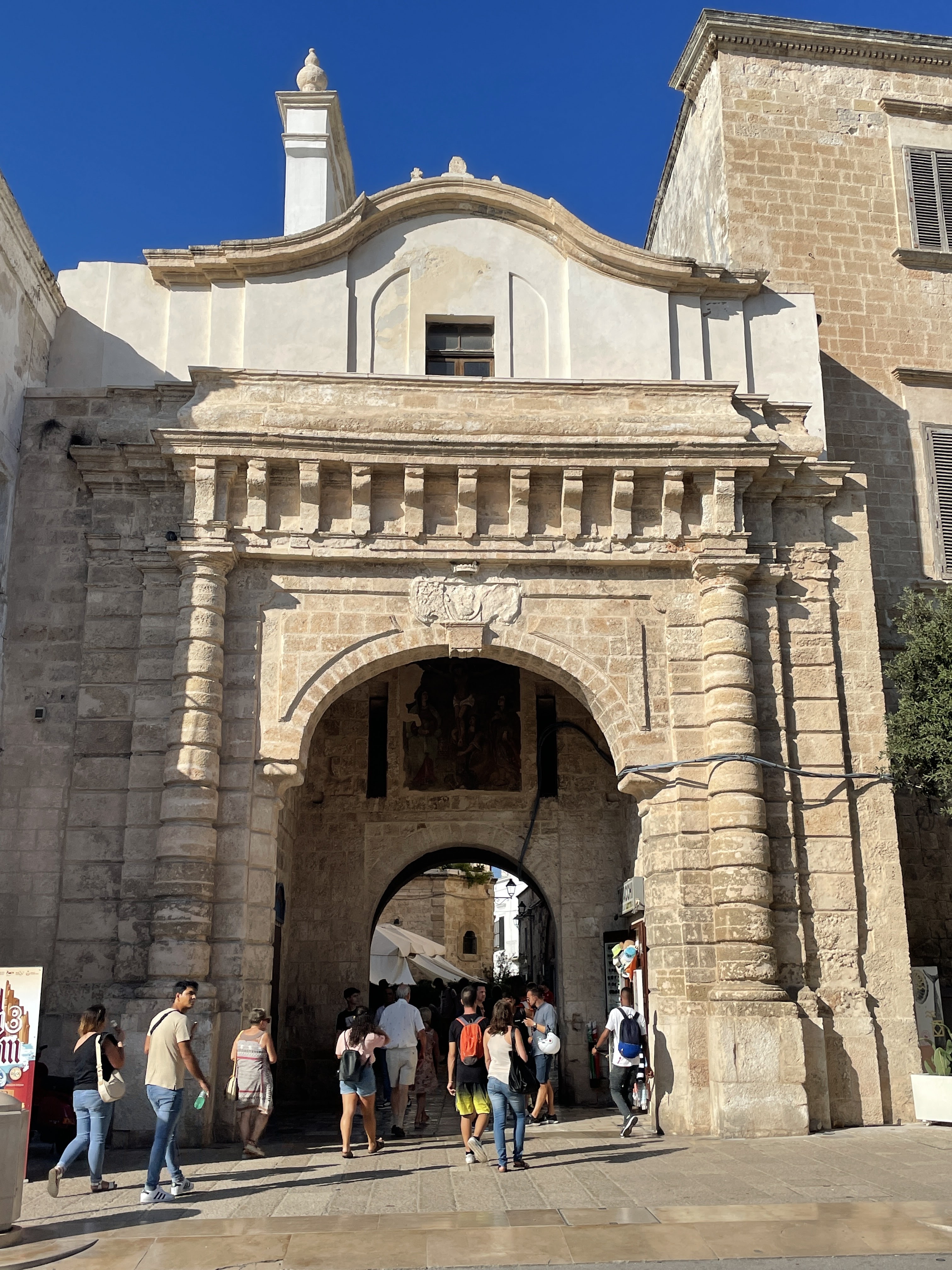
We continued across the bridge - after having a disastrous encounter with a melting chocolate ice cream  - and were delighted to find this imposing gateway leading into the old town.

Quite soon on the left was this intriguing building with a bell tower, apparently a church but attached to the Osteria dei Mulini. It turns out to be the Chiesa del Purgatorio - the Church of Purgatory!


We carried on to enter the main square, Piazza Vittorio Emanuele. Here we found the Clock Tower, the Palazzo dell'Orologio.  It dates from the 19th century and surprisingly is still wound up by means of ropes.


To the right was the imposing Church of Santa Maria Asunta (the Church of the Assumption of the Virgin Mary). There was a nice bar opposite, so we adjourned for a refreshing Peroni.
 
 
Here is the interior of the church.


 We may well have missed other delights, but this was a very pleasant short exploration..

Monday, 29 August 2022

Conversano

                                                                The Castle of Conversano

We are on a family holiday in Conversano, an interesting town of 26,000 people to the south of Bari in Puglia, Italy. Much of our time will be spent by the swimming pool, but first we will do some exploring.

The Castle was believed to exist during the Gothic War of the sixth century and underwent significant reconstruction by the Normans in the eleventh century. The interior of the castle hosts an art gallery exhibiting work by Neapolitan artist Paolo Domenico Finoglio: a series of dramatic canvasses spread over several rooms. There is also a museum of clothing elsewhere in the complex.

Leaving the main part of the Castle we turn right to go round to the other side of the building. 


It leads into a lively area with bars and restaurants, with one of the town gates: the Toll Gate of 1338.

On the right of the photo is the campanile of the Church and Monastery of San Benedetto. It is somewhat chaotic, but the cloisters are very attractive. This is the main entrance ...

... and here a section of the cloister.


We head through the Toll Gate and into the Piazza 20 Settembre, to be faced by the Town Hall.


We amble downhill and eventually emerge through another gateway, La Porte del Carmine.


It feels as though this is the end of the old town so we go back through the gate and loop back uphill. We emerge in front of the Cathedral: Santa Maria Assunta Basilica Minore. It seems to have had a recent refurbishment as the interior and exterior are in excellent shape.


This marked the end of our impromptu tour, but I will just add the wonderful Calvary of Santa Maria della Misericordia which dates from the 16th century and later alterations. It is on the edge of the town.