Saturday, 8 April 2023

Almshouses of Exeter Part 1


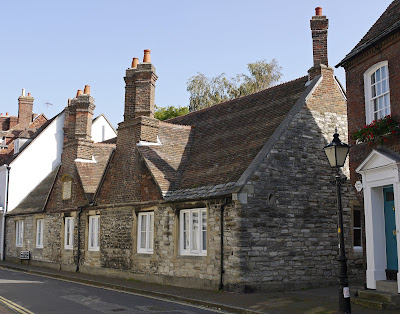
Starting from the Cathedral it is a short walk to Magdalen Street to see Wynard's Almshouses. They date from 1453, but seem to have been rebuilt in 1863 (Pevsner). They make a handsome group. A more detailed account can be found in the Exeter Memories website.

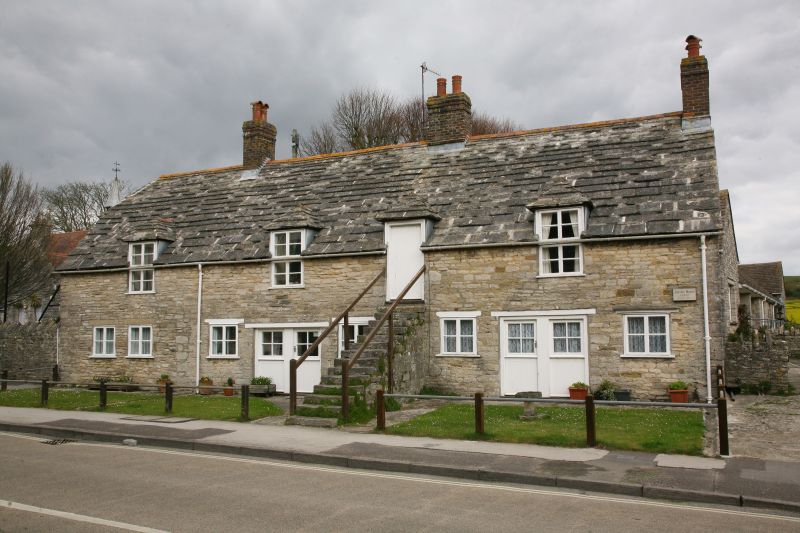
Catherine Street is the the area which suffered the most bomb damage in the second world war. On the right are the ruins of St Catherine's Almshouses (1458) together with St Catherine's Chapel and Canon's house.


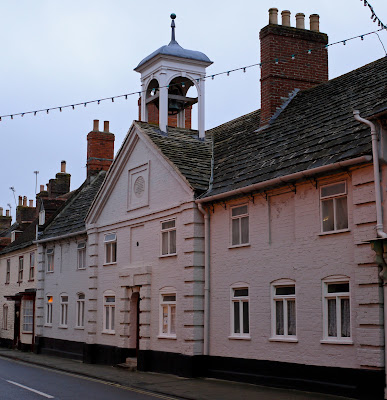
In Mount Dinham, also near the centre, are the Mount Dinham Cottages. In 2012 the Mount Dinham Cottage Trust signed a 125 year lease to secure the continuity of the Almshouses which were renovated in 2015.
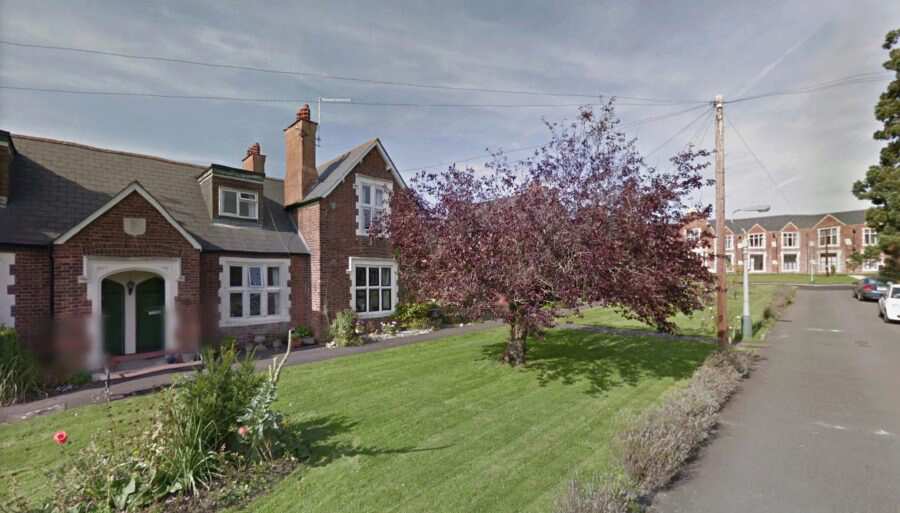
 

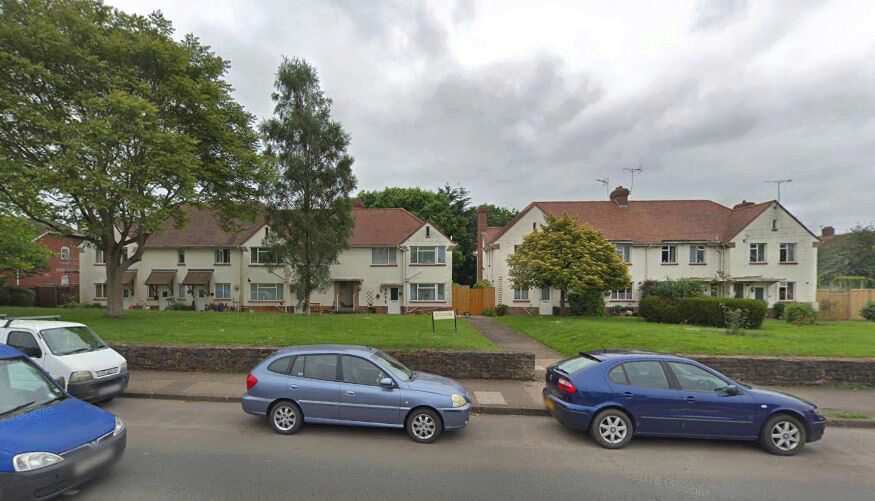
Flaye's Almshouses which can be found on Pinhoe Road in the North East of the City are managed by the Exeter Homes Trust. There are twelve properties: 8 one bedroom flats, generally occupied by single people, and 4 two-bedroom houses.
 

 In the Pennsylvania area on the west side of the city are the lively Licenced Victuallers' Almshouses built in 1872 by A H Wills.

 File:Licensed Victuallers Almshouses, Union Road, Exeter - geograph.org.uk - 296327.jpg

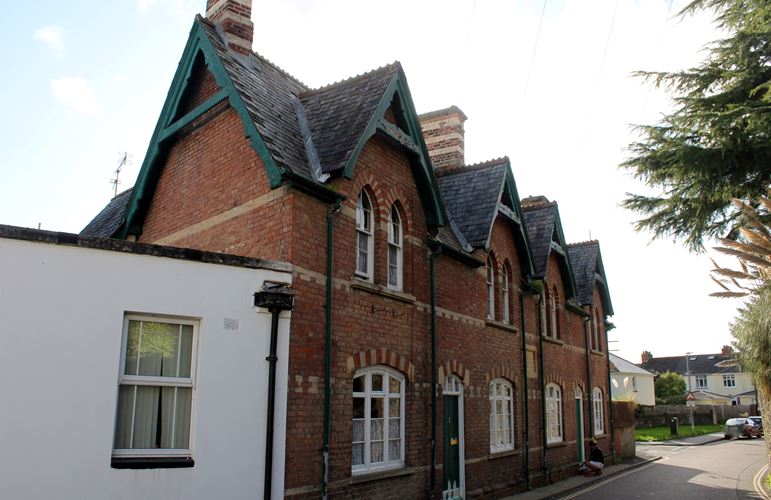
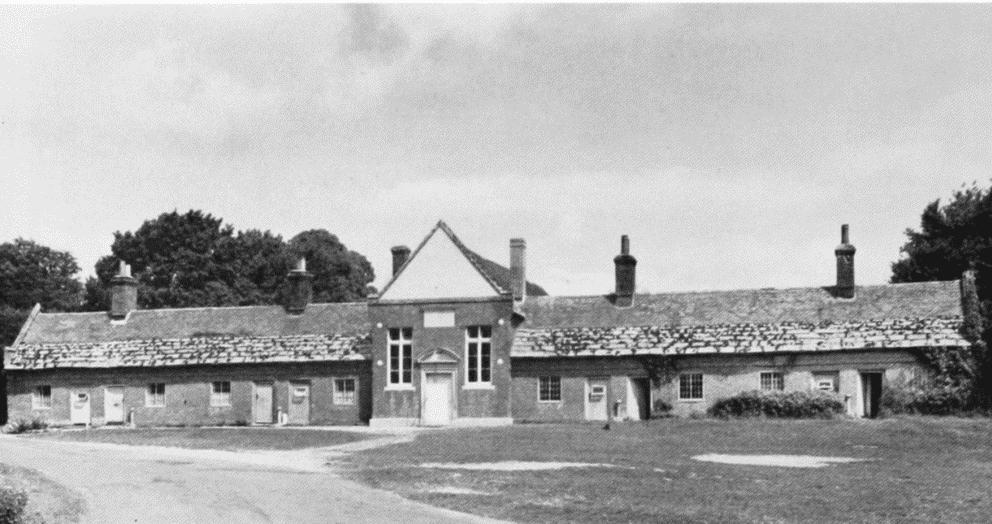
In St. Sidwell’s on the fork between Old Tiverton Road and Blackboy Road is a medieval Chapel and adjacent Almshouses (photo below) beside the St. Anne’s Orthodox Church. Pevsner says that the 16th century Almshouses were restored in 1838; two Tudor style houses were added later by W D Caroe. 

PhotoPhoto


Wednesday, 5 April 2023

Almshouses of Barnstaple

Barnstaple has the unusual distinction of being one of the four defensive towns of Devon in medieval times. Today, it has a impressive number of almshouses.

The first is these is the Penrose almshouses of 1627 are in Litchdon Street. John Penrose was a successful cloth merchant and in 1620 was the Mayor of Barnstaple. On his death in 1624 his will provided for the construction of an Almshouse. They make lovely composition with projecting buildings at the ends joined by a colonade with the main entrance in the middle.

You are welcome to go into the courtyard with a water pump in the middle.

The caretaker is said to be happy to show people the chapel (the right hand building on the street front). The lectern from which the Reader read from the bible to the almsfolk is still present along with a lovely plastered ceiling.

Towards the centre of the town along Trinity Street, passing the Salem Almshouses on the right. They were founded in 1834 by Charles Roberts for 24 men and women. There are three ranges, with the street side left open.

Pilton, once a separate town and is possibly older than Barnstaple itself (according to Pevsner). In Pilton St are the attractive Lower Almshouses dating from 1860.


At the top of the street are the Feoffee Cottages and Church Cottages, a very pretty group with the arch in the centre. They date from 1849. It leads to the church of St Mary, founded in the 12th century and once belonging to Malmesbury Abbey.


The redbrick Lake Almshouses of 1863 are perhaps less attractive.

LAKE ALMSHOUSES, Barnstaple - 1385381 | Historic England


In nearby Bishop's Tawton are the impressive Law Memorial almshouses which have 12 flats and date back to 1885. A central plaque records that they were built "in loving memory of Thomas Shephard Law and of William Henry Law, His Son. By the sorrowing wife and mother".  The fuzzy photo below does not do the almshouses justice.

THE LAW MEMORIAL ALMSHOUSES, Bishop's Tawton - 1317905 ...


Saturday, 25 March 2023

Lanzarote


We enjoyed an enjoyable short holiday in Lanzarote in January and as always I took an array of photos. Unfortunately, when I got home I somehow managed to delete them all with just a few exceptions. I have now decided to create a new version by locating appropriate photos from wherever I can find them.

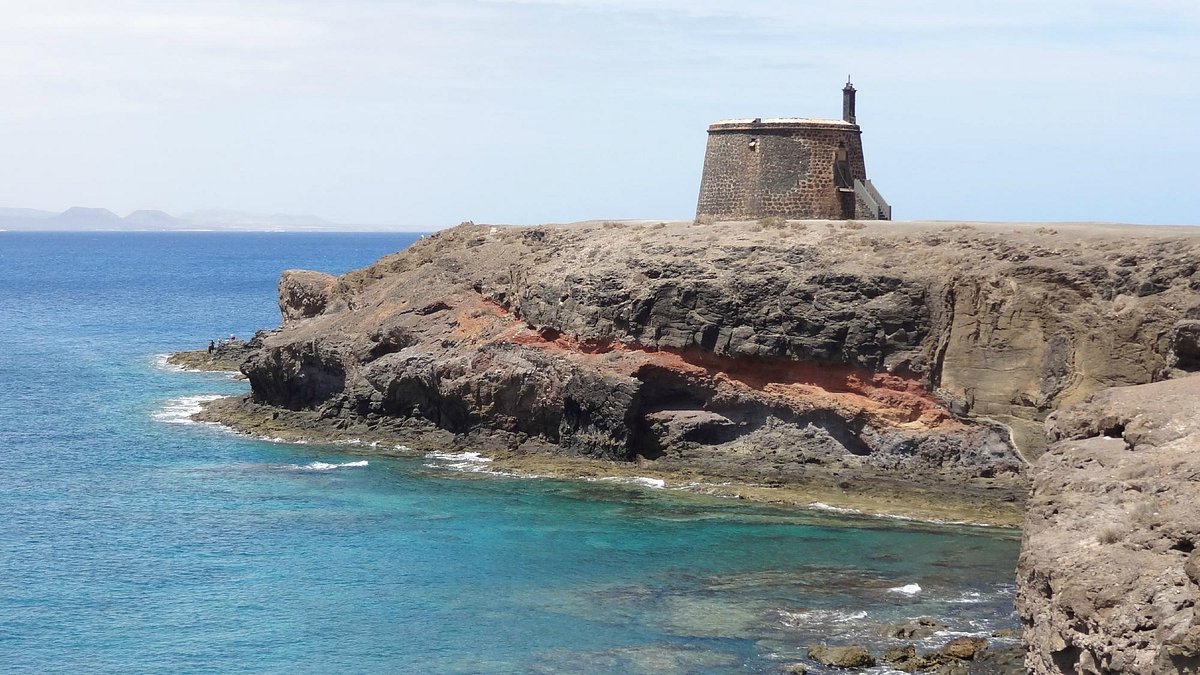
The Castle of las Coloradas, above, is at the far eastern end of the Playa Blanca where we stayed. The fort was designed in 1741 by the engineer Don Claudio de L’Isle. In 1749, it was set on fire by Algerian pirates. In 1767, the engineer Alejandro de los Angeles, raised the fort again. Until 1936 the fort belonged to the army, then to the Ministry of Finance and since 1978 it has been property of the Yaiza Town Hall.

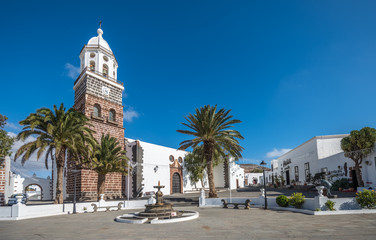
The pictures which follow are sequenced from east to west. We started at the fort and headed back towards the marina, climbing and then descending past a number of whitewashed buildings. This one was once a church, but is now a gallery.

Central square of Teguise town, Lanzarote, Canary Islands, Spain 

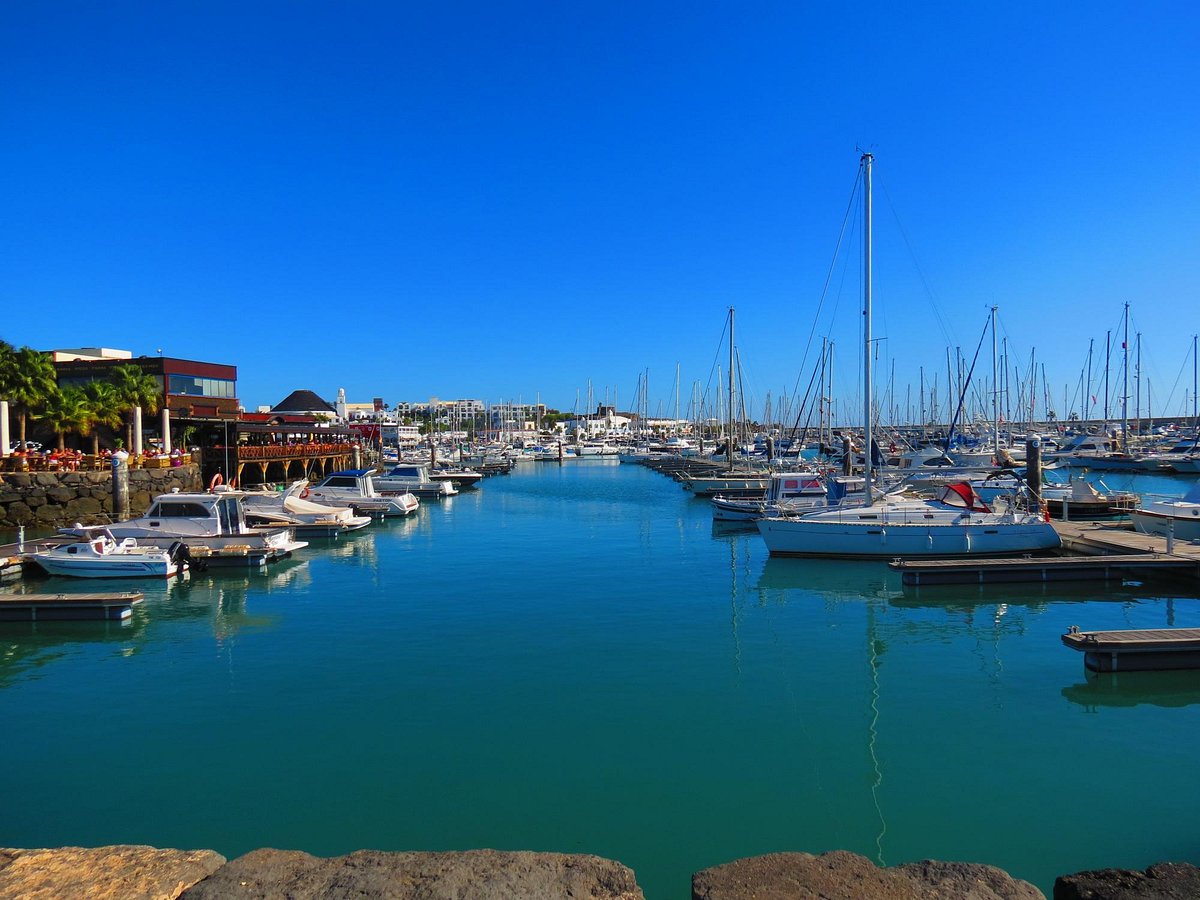
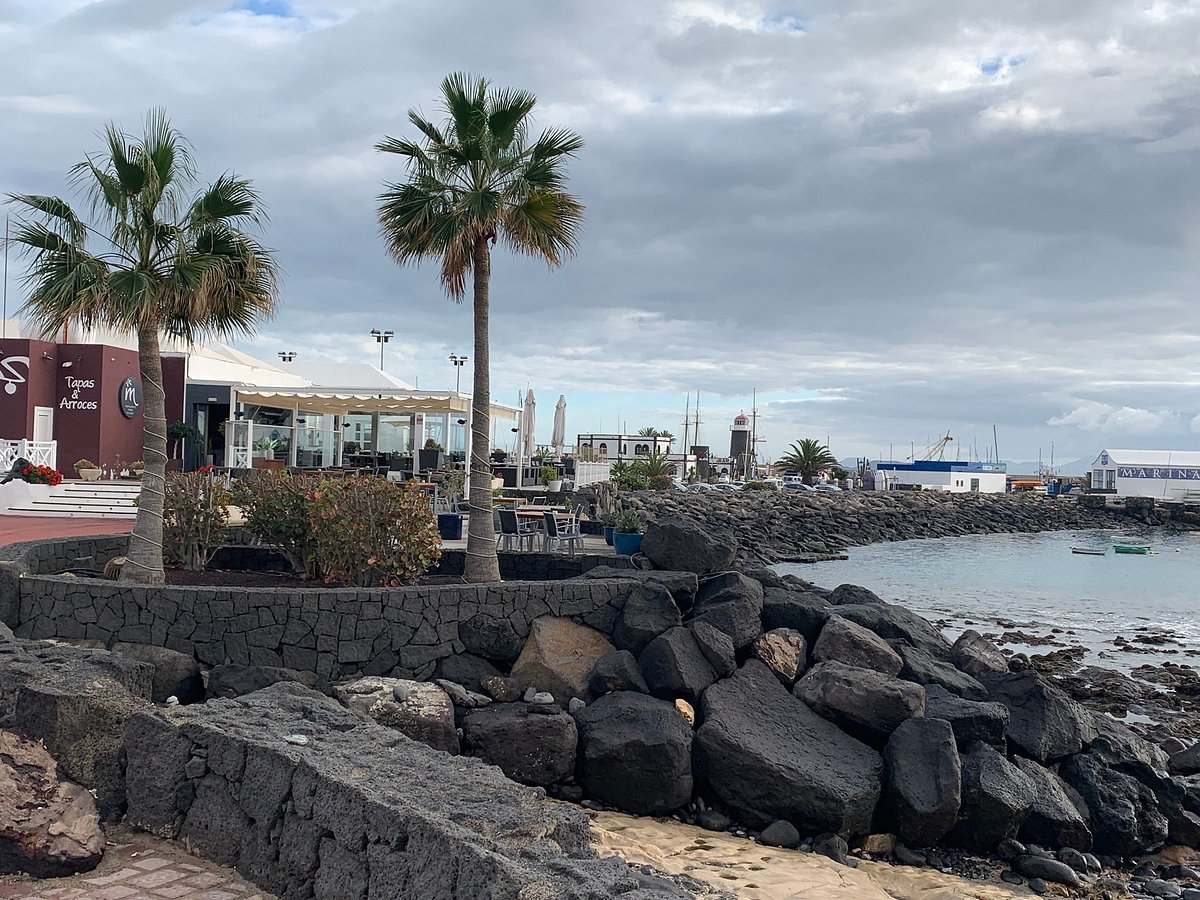
We headed towards the marina. This picture is astonishingly bright. Further mooring areas are out of sight to the right. To the left is a very pleasant restaurant where we enjoyed a couple of nice lunches overlooking the Marina.

Continuing past the end of the marina we continue along the road which become a promenade at the back of the beach.

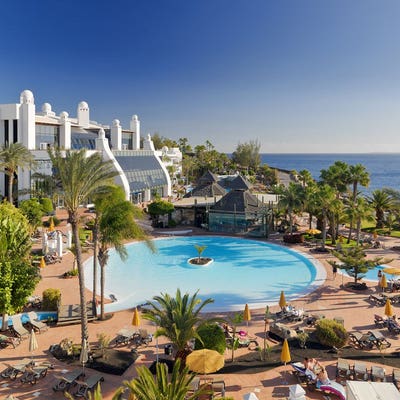
Continuing along the promenade we passed our hotel, which is directly behind the Playa Dorada, one of the relatively few sandy beaches along this stretch of coast. We had heard about the Lighthouse and we inevitably decided to walk there and back. 

The promenade continues with the path often quite close to the sea and some inviting restaurants on the landward side. We passed the small port and continue past the Playa Flamingo, a newish, possibly artificial, sandy beach with barriers.


Now we entered a zone of large hotels, all white and often designed in a Moorish style. The Timafaya Palace hotel below is a typical example.


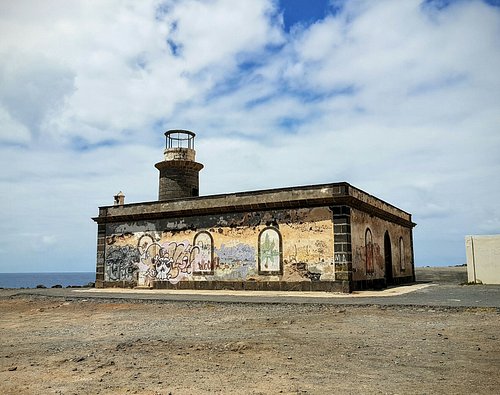
As the Lighthouse became nearer we passed some small cafes. There were fewer people now. It turned out to be further than you might expect, but eventually we reached the impressive Lighthouse tower and and a rather tatty-looking low level structure behind it.

File:Lanzarote Faro de Pechiguera R02.jpg - Wikimedia Commons


Wednesday, 8 February 2023

Axford and Ramsbury Manor


The first walk of the year with my walking partner, Mervyn. He had kindly developed a circular walk starting to the west of the delightful Wiltshire town of Ramsbury at the rather prosiaic Axbury Pumping Station (marked as S).

We start along the narrow road which followed Sound Bottom and was soon delighted to see my first Snowdrops of the year.

After a while we took a path on the left which led south to reveal a fine vista across the fields and then passed a pleasing red brick house ...

... and along a lane to skirt a rather imposing Georgian (or more probably Georgian-style) house.

We followed the path down to Stichcombe and after crossing the Kennet we had an informative chat with a couple who were clearly very familiar with the area, pointing out to us Little Egrets and other wildlife. 

We passed Cowleaze Cottage and followed the border of Ramsbury Manor Park. According to Wikipedia it belongs to the Capricorn Foundation, a trust which has the task of maintaining the house as a museum and cultural resource for the nation. It dates from the 1680s.

The best views were of the beautiful lake with the House beyond it ...


... and then the gates on the other side of the grounds.


The final section was rather arduous as we had to follow White's Hill for a mile or so. This is the main road from Ramsbury and has no footpath. Fortunately, we made it OK.

Overall, a delightful walk of about 8 miles.

Thursday, 17 November 2022

Almshouses of East Dorset


Result Detail | Model village, Historic england, Dorset

We start in Bournemouth with the very attractive Talbot Village Almshouses. Talbot Village Almshouses were endowed by two sisters Mary and Georgina Talbot in 1862. They were part of Talbot model village which was created by the sisters. They are still run by the Talbot Trust.

 Our next stop, to the north, is the imposing Sir Anthony Ashley's Almshouses in Wimborne St Giles.

The almshouses are older than the nearby church of St Giles - they date from 1624 and were the gift of Sir Anthony. His grandson became the first Earl of Shaftesbury in 1660 and the title is still in the Ashley-Cooper family.

In Pamphill there is a former almhouse. In 1695 Roger Gillingham of the Middle Temple left property in Hackney, Stepney and Bedfordshire to trustees who were to 'lay out a sum not exceeding £400" to endow some almshouses. After the last almshouse occupant died in 1971 the County Council bought the whole range of the buildings, modernising so that the almshouses became part of the school building. The school became a first school for 5-9year olds in 1973 and still is.


Continuing southwards we come to Wimborne Minster and St Margaret's Almshouses at the top of Victoria Road (B3082). There is also small church. 


Coming now to Poole there are the St George's Almshouses in Church Street, which date from before 1429 (Pevsner). They could only be almshouses!


Heading Southwest to reach Corfe Castle you may spot the Jubilee House on the main road. It was formerly almshouses, but is now a private dwelling.

The next stop is Wareham where there is a fine group of Almshouses: Streches Almshouses. The plaque on the gable says these Almshouses were erected in 190, replacing former Almshouses of 1741 in East Street.

Streches Almshouses, Wareham 

The central feature, which looks rather like a small chapel, is quite imposing
 
 
They date originally from 1418, to care for 'six ancient men and five women' of Wareham, but were rebuilt in 1712. The bellcote once adorned the previous town hall of 1768, but was relocated here - rather successfully - when the present town hall was built.
 

Now we head north to Blandford Forum and the Ryves Almshouses. (described as a Gerontocomium on the plaque under the main pediment). They date from 1682 and make a lovely group. This means that they pre-date the fire of 1731 and must have been right on the edge of the town when they were built. They are in beautiful condition.


In Milton Abbas the Tregonwell Almshouses bear the date 1779 when they were moved from the old village and rebuilt on their present site in the new village.


Note: I believe this is a full set of the Almshouses in East Dorset, but additional information or errors to be corrected would be most welcome. Click on the Comments option at the bottom of the post. 
 

Wednesday, 9 November 2022

Pewsey

After a longish gap, Merv and I are back on the walking trail. We start our walk at Pewsey Wharf, just catching a view of a rapidly disappearing rainbow.

We head west under the road bridge and along the Kennet and Avon Canal. A surprisingly large number of boats are moored on the right bank.

We leave the canal after a short stretch along the canal and head towards Wilcot. This proves to be a small but very interesting village. The church of the Holy Cross has been altered several times since its foundation in the 12th century.   According to Pevsner it was much restored after a fire in 1876.

Opposite is a fine house ...

... with a pretty cottage next door.

The manor house, close to the west end of the church, dates from the early 17th century with remodelling in the 18th. It is very well concealed however. We continued along the path away from the village and were delighted to at least get a snap of this delightful circular stone dovecote dated 1737.

We tramped through Mannington Abbots and Charcott to reach the edge of Pewsey. We followed the rear fence of a line of houses and were intrigued to spot this lovely plant which had spread out beyond the fence. I wish I knew what it was.

Arriving in Pewsey we passed the Court House in Church Street. It dates back to the 16th century.

Turning left into River Street we passed a rather handsome brick building which could pretty much only be a former school. It was.

Further into the village we passed The Old Fire Engine House.


After a sandwich break we continued along the road, passing the railway bridge. The interesting thing was that we walked steadily uphill to return to Pewsey Wharf and the canal. I had always imagined that canals were at a low level relative to the surrounding terrain, but this is plainly not so.

Thursday, 20 October 2022

Geneva

We are on our way home from a short but delightful visit which brought us into both Switzerland and France. Happily, we have enough time in Geneva to have a brisk walk around. We start at the Place du Molard which has a delightful tower on the corner: Molard Tower, built in 1591 and reconstructed several times The last renovation took place in 1906-1907.

 Looking back we spot this rather wonderful creature.


At the far end of the Place is a fascinating slender obelisk. A closer look reveals that the obelisk appears to be standing on four round balls - and there is a further larger one at the top.

In nearby Rue de la Croix D'Or there are some impressive buildings in an unfamiliar, but imposing, style. I suppose they are 19th century.


We head now towards the celebrated Cathedral, passing this lovely fountain ...
 

... and the covered passageway up to St Peter's Cathedral.

St Peter's Cathedral is a former Catholic Church built in the late 12th century, but later modified. It became a Protestant church during the Reformation. 
 
 
At the rear of the church are a surprising white tower and a fleche.
 
 
We couldn't resist climbing to the roof, which gave us a wonderful view over part of Lake Geneva and the famous Jet d'Eau
 
 
Also from the tower there was a great view down of the nearby roof tiles. I thought that the colours in this one were especially appealing.
 

We then passed an intriguing group of three cannons with three descriptive panels behind them. They were captured by the Austrians in 1814 and moved to Vienna, but later restored to their original position in 1815.


We continued along the Treille Promenade. It is famous for having the the longest wooden bench in the world: 120m! It is also where “Geneva official chestnut tree” (le “marronnier officiel” in french) is located. Each year, Its first leaf announce the arrival of spring in Geneva .
 
 
 At the end you emerge into a busy square dominated by the imposing Grand Theatre of Geneva.


We continued, passing this interesting building, now dealing in wealth management ...

 ... to reach the final building on our route which is the Statue of Philibert Berthelier at the bottom of this impressive tower. Berthelier was a Genevan patriot and an uncompromising enemy of the Duke of Savoy in his ambition to control Geneva. Berthelier was arrested in August 23, 1519, and was tried for treason.  After a summary trial, Berthelier was found guilty and was sentenced to death by beheading. The sentence was carried out on the same day.