Showing posts with label church. Show all posts

Friday, 12 May 2023

Lille: From south East quarter to the Place de Theatre

Arriving in Lille, we took a taxi to our hotel. It was a bit of surprise as it was previously the Faculty of Medicine and Pharmacology  It proved to be a spacious building with a couple of quirky features to greet us ...


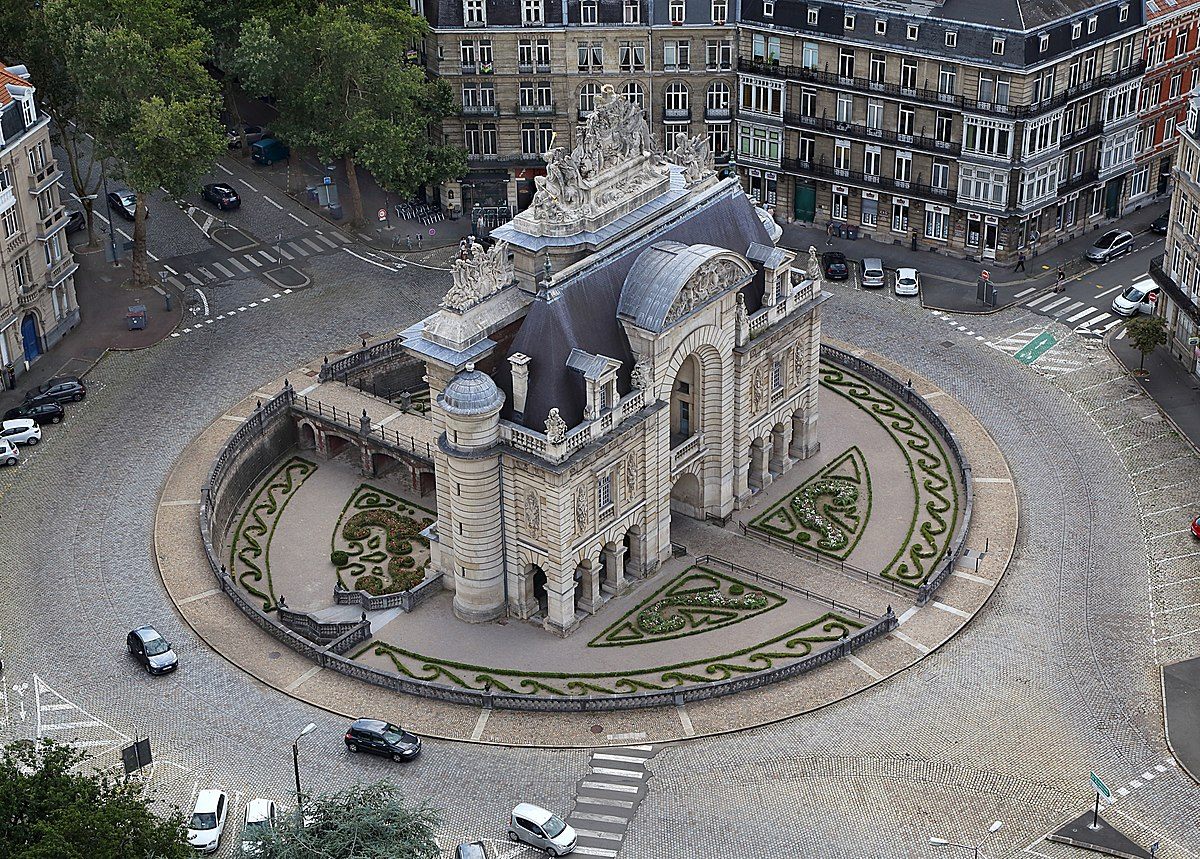
We began our exploration of the city by turning left out of the Hotel. Our first major sight was the beautiful Porte de Paris. It was built in the 17th century to commemorate Louis XVI's capture of the city.


This aerial photo gives a much clearer idea.


We headed towards the Town Hall, with its slender belfry in the art deco / Flemish style. It is 104m tall.
 

Sadly, it wasn't possible for us to get to the top, but we enjoyed this stonework at the bottom of the tower.

 
Over to the left was the Hospice Gantois founded by Jean de la Cambe  in 1462 and extended in 1664 and 1672. It remained a hospital until 1995. It is a 5 star hotel.

                        File:Lille hospice gantois.jpg

Heading away from the Hospice, we reached the imposing St Sauveur church.

Further to the east is the Noble Tour, a rather unprepossessing structure. It is what remains of of a fortification built during the 100 Years' War by Philip the Bold, Duke of Burgundy. When Lille became French in 1667, Vauban converted the tower into a half-buried powder supply depot. Within the three-metre thick walls, are two superimposed rooms; one has a vaulted ceiling with intersecting ribs, the other has a low dome of brick, illuminated by three small openings: they are reached by a staircase in a tower. 


From here, we eventually reached the Place du General de Gaulle. This is the Opera.


And here is the famous Morel et Fils. It was once a lingerie shop and later a bookshop. Nowadays it is a popular cafe.

Nearby, the CCI, The Chamber of Commerce of Lille is an important landmark in the city. The clock tower plays popular songs in the Theatre's square.

 
The final photo in this part of the city shows the Carlton hotel, where we stayed on a brief visit many years ago.

Finally, we passed the Palais de Beaux Arts on our way back to the hotel. Sadly we had run our of time to explore its delights including works by Monet, Rubens, Goya, Breughel, Van Gogh ....


Friday, 16 September 2022

Rye


Rye is of course in West Sussex rather than Kent, but it is too good to miss. We parked on the east side of the town and headed towards the centre and almost immediately ran into another handsome Smock Windmill. It is now a B&B!

Once we were in the town proper we passed this pub, the Old Bell which claimed to be the oldest pub in the town - dating from 1390.


We continued up the High Street passing the Old Rye Grammar School of 1636. The founder died in 1838 a bequeathed the building to the town as a free Grammar School. It continued until 1901.

Further along the High Street was a house lived in by Radcliffe Hall (born Marguerite Antonia Radclyffe Hall) author of the novel The Well of Loneliness.

Continuing to the left we came to the Landgate (the portcullis was removed in 1735). This is the town side view ...

... and here is the view from outside the walls that once were joined to it.

From here we headed to the Town Hall. The present Rye Town Hall was built in 1742, and is the third known to have existed on the Market Street site (the first of which was burned to the ground by the French in 1377 - the French were always a threat).

Just behind it is the passage which leads to St Mary's Church. It is tucked away, but impressive when you go inside. The clock on the turret was installed in about 1561.

It was built early in the 12th century when the town itself and much of the surrounding area was held, under a Royal deed of gift from the Abbey of Fecamp in Normandy. This link with Fecamp, which was an important member of the Cinque Ports Confederation, explains why Rye has such a magnificent church. In between there was a period of decline from the late 17th century and extensive repairs in 1882 and after the Second World War.

I was surprised to discover that I hadn't noticed a window by Burne-Jones, but


From there we visited one of the oldest buildings in Rye, the Ypres Tower, which was built in 1249, as "Baddings Tower", to defend the town from the French. It was later named after its owner, John de Ypres,  and is now part of the Rye Museum.

This is the view from the Tower. You can just about make out the sea on the horizon, which illustrates the well-known retreat of the sea from the town.

Finally, we noted the splendidly-named Mermaid Street with its cobbled road surface.


From there it remained only to retrace our steps to the Windmill and our car park.


Wednesday, 14 September 2022

Hever Castle


Hever Castle began as a country house in the 13th century. From 1462 to 1539, it was the seat of the Boleyn (originally 'Bullen') family. The oldest part of the castle dates to 1270 and consisted of the gatehouse and a walled bailey. The property subsequently passed through various owners, including the Waldegrave family from 1557 to 1715, the Humfreys family to 1749 and the Meade-Waldo family from 1749 to 1903. During this latter period of ownership, the castle fell into a poor state of repair.

Luckily, in 1903, it was acquired and restored by the American millionaire William Waldorf Astor who used it as a family residence. He completed a restoration, added the Tudor village and also added the Italian Garden to display his collection of statuary and ornaments


The Tudor village is a large and quite picturesque collection of buildings. Nowadays you can stay in one of these for Bed & Breakfast.

The Castle is to the right of the Tudor village. Here is the square-on view. It features the oldest working original portcullis in England.

And this is the sideways-on view.

You enter across the bridge and through the massive gatehouse to emerge into a small courtyard which leads to the interior of the castle. The interior is quite opulent with beautiful wood carving everywhere. This dates only from 1903-7. Pevsner describes it as a virtuoso display. The architect was J L Pearson and the carver was W S Frith.

The Inner Hall

The Drawing Room.

The Staircase Gallery was built over the Entrance Hall in c.1506 by Thomas Boleyn to give access between the two wings of the house and his newly built Long Gallery upstairs.


The Long Gallery was constructed in the sixteenth century and extends across the entire width of the Castle. It was used for entertaining guests, taking exercise, and displaying art collections. The panelling dates from the sixteenth century, but the ceiling is an early twentieth-century reconstruction in the Tudor style created by Nathaniel Hitch.

I have focused mainly on the Castle, but there are also extensive grounds, ornamental gardens and a large lake. 

And finally, as you enter or leave the Castle you will pass the church of St Peter. It dates from the 12th Century, but was restored in 1894. It contains the tomb of Sir Thomas Bullen, father of Anne Boleyn and grandfather of Queen Elizabeth the First.


Wednesday, 31 August 2022

Ostuni


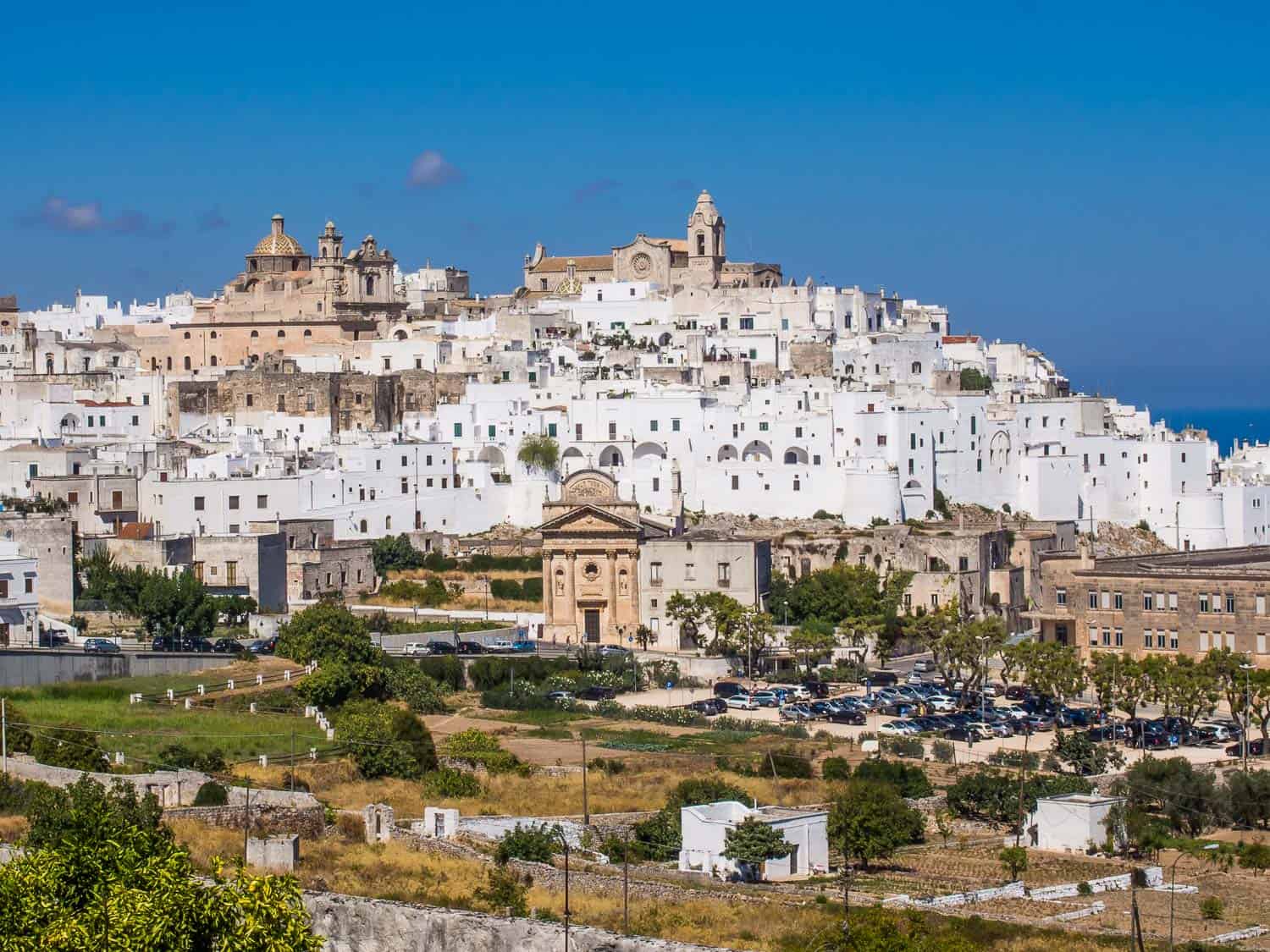
Today we are on an outing from Conversano to Ostuni, the White City of Puglia. We approached from the landward side. Had we gone  round to the seaward side (the sea is only 3 kilometers away) we would have had this more spectacular view.

Exploring Ostuni, Puglia's White City


We parked the car in a very quiet car park and found our way into the the not very imposing Porta Nova, which dates from the 15th century.


We began a leisurely upward climb along paths between whitewashed houses. Many had very elaborate stone door frames.

We emerged from a series of narrow paths into a square with the Cathedral of Santa Maria Assunta at its end. The Cathedral was built between 1435 and 1495 in the late Gothic style. The magnificent rose window has 24 finely carved ribs.


Looking back, we realised we had walked under the beautiful loggia of 1750 which links the Palazzo Vescovile and the Palazzo del Seminario.


We headed next to the interior of the church is XVIII century and has a level ceiling and Baroque side chapels.

We continued our wandering along more winding streets ...


... and then came on the Baroque church of Santa Maria Maddelena. It is now the Archaeological museum.

We headed down towards the main square ...

... but overall we felt it was too crowded by comparison with the quiet paths we had followed so far. I did rather like these arches however.